Summary After One Year of the ZNU Management Cycle
For one year now, UW/H has been certified according to the “ZNU Standard for Sustainable Management.” We have now passed our first surveillance audit and are pleased with the progress that has already become apparent in such a short time.
What does this certification mean for us as a university?
Through the ZNU Standard, we are committed to sustainable management. This is accompanied by an internal management system that enables us to advance and report on key sustainability issues (environmental, economic, and social) at UW/H.
What are these issues?
These topics were developed by the university leadership, academic and administrative leaders, students, and members of other relevant groups in workshops held in the run-up to certification. These include, among others, the quality of teaching, the quality of research, staff training and professional development, openness to change, the health of staff and students, a culture of dialogue, finances, data, innovation, and climate protection.
These key topics at UW/H form the starting point for the goals and measures that the heads of the various departments have defined in consultation with the Sustainability Coordination Office.
How are the defined topics implemented in practice?
The participating departments are implementing their measures step by step. An annual monitoring meeting is held to determine key performance indicators related to the goals, discuss potential obstacles to achieving them, and calibrate or redefine the goals as needed. These meetings take place in the lead-up to the annual audit conducted by TÜV Rheinland. This results in an annual management cycle comprising the phases of planning, acting, measuring, and reporting, which structures the collaboration.
Some examples of measures:
- The Vice President for Research is working with the associate deans for research to introduce a sustainability checklist for research projects.
- The Human Resources Department plans to introduce a digital training platform to offer university-wide training on topics such as data protection and IT security. The plan is to launch this initiative in the second half of 2026.
- Participation in professional development opportunities—such as leadership training, teaching workshops, wellness programs, and sustainability training—is being tracked, and ideas for further promotion are being developed.
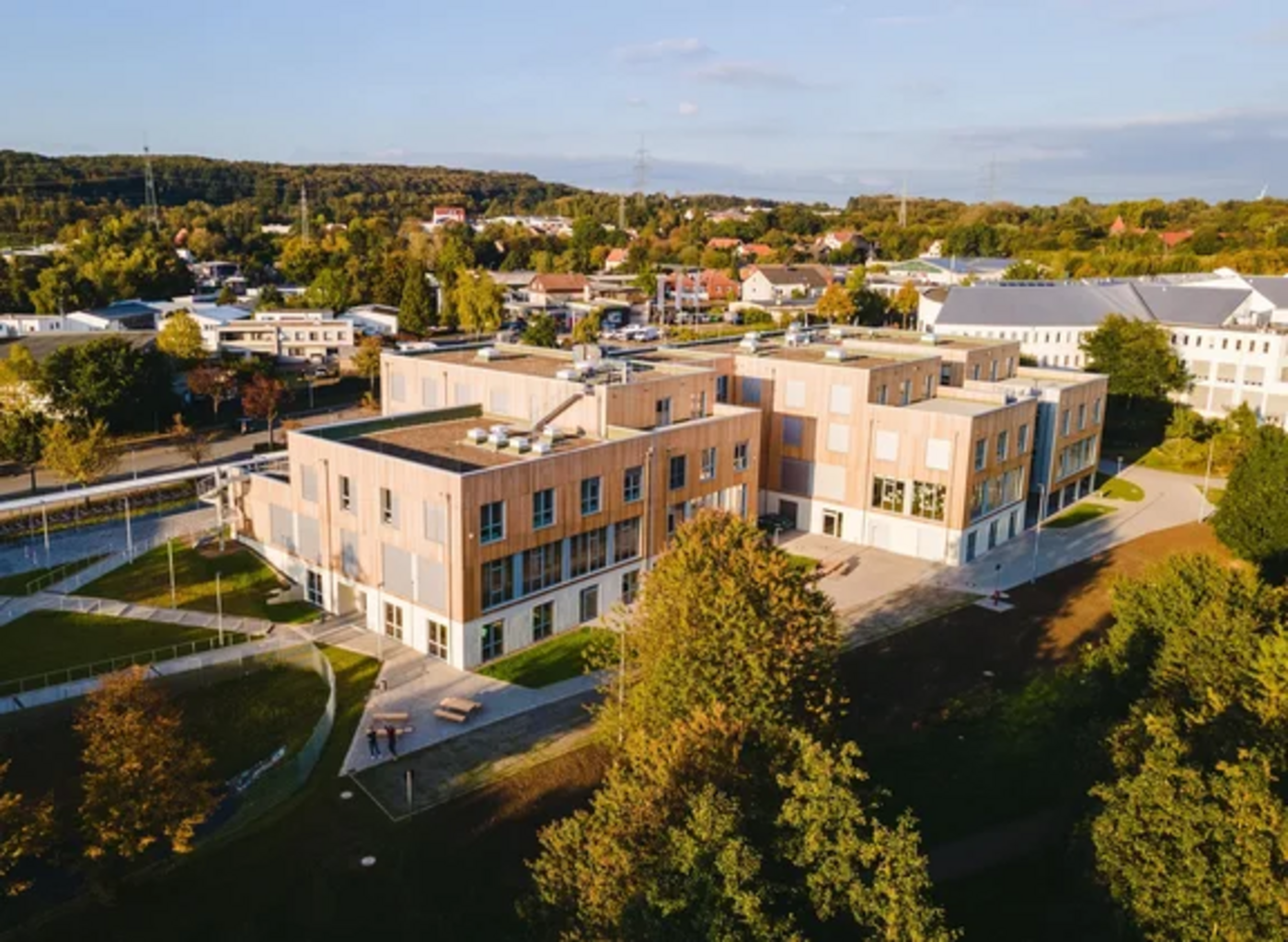
- Greenhouse gas emissions are being reduced through various facility management measures; for example, by converting to a decentralized hot water supply in the campus building, the boiler can be shut down completely during the summer.
While implementing the requirements of the ZNU Standard does entail some additional effort for all involved, the concise, annual reporting makes developments and successes visible that would otherwise be lost in the day-to-day operations. Through an external perspective, the auditor provides new impetus and reinforces the implementation of existing, forward-looking ideas. The annual management cycle ensures the continuous improvement process and promotes collaboration among the various departments.
What’s next?
Following the initial certification in 2025 and the surveillance audit in 2026, a second surveillance audit will take place next year. These audits are less extensive and assess the status of ongoing development before a recertification audit is scheduled for 2028.
By then, many goals will have been achieved. Through a participatory process, the key issues will then be reviewed and adjusted, and new goals set accordingly.
With certification according to the ZNU standard and external auditing by TÜV Rheinland, UW/H is making a systematic, measurable, and sustainable contribution to the ongoing reduction of its carbon footprint and is thus actively taking responsibility for addressing the impacts of climate change.